

A Schematic of the aPTT
Activated Partial Thromboplastin time (aPTT) , is common screening test done to evaluate function of the intrinsic clotting system.
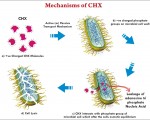
Chlorhexidine Antiseptic Action
Chlorhexidine is effective on both gram positive and negative, although some gram negative bacteria have resistance.
The bactericidal effect is a result of the binding of this cationic ...
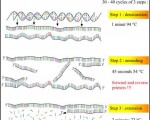
PCR: Polymerase Chain Reaction
The polymerase chain reaction (PCR) is a biochemical technology in molecular biology used to amplify a single or a few copies of a piece of DNA across several orders of magnitude, generating ...

Bacteria in urine sediments
Bacteria can be identified in unstained urine sediments when present in sufficient numbers by their characteristic rod shapes. This is more readily done for bacilli than cocci, which ...

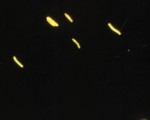
Auramine-Rhodamine stain
The Auramine-Rhodamine stain (AR), is histological technique used to visualize acid-fast bacilli using fluorescence microscopy, especially the Mycobacterium genus like Tuberculosis ...


Auramine-Rhodamine Staining for acid-fast organisms
The auramine-rhodamine stain (AR), is histological technique used to visualize acid-fast bacilli using fluorescence microscopy, especially the Mycobacterium genus like Tuberculosis ...


Spectrophotometer overview
A spectrophotometer is a photometer that can measure intensity as a function of the light source wavelength. Important features of spectrophotometers are spectral bandwidth and linear ...

EDTA (Ethylenediaminetetraacetic acid) anticoagulant
The Interior wall of the tube is evenly sprayed and coated with either EDTA K2, EDTA K3.
Compared with other anticoagulant, EDTA anticoagulant has less influence on the blood cells ...


