Featured Articles
 11 years ago
White blood cells: Description, Classification and Formation
 11 years ago
Blood Cells and Platelets
 11 years ago
Gram stain of wound specimen
All Stories

Spectrophotometer overview
A spectrophotometer is a photometer that can measure intensity as a function of the light source wavelength. Important features of spectrophotometers are spectral bandwidth and linear ...

EDTA (Ethylenediaminetetraacetic acid) anticoagulant
The Interior wall of the tube is evenly sprayed and coated with either EDTA K2, EDTA K3.
Compared with other anticoagulant, EDTA anticoagulant has less influence on the blood cells ...
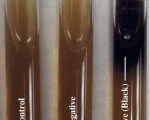
Bile-Esculin test for Enterococcus species
Bile-esculin test is based on the ability of certain bacteria, notably the group D streptococci and Enterococcus species, to hydrolyze esculin in the presence of bile (4% bile salts ...

Small Lymphocyte
– most common agranulocyte
– slightly larger than RBC, nucleus takes up most of cell
– large numbers migrate in and out of tissues and lymphoid tissue
– ...


Sodium Citrate anticoagulant
Sodium Citrate 3.2% blue top tube for all coagulation tests.
It Chelates Calcium which is ideal, we want to control it when we add it.
9:1 ratio of blood:anticoagulant (4.5 ml ...

Measurement of the erythrocyte sedimentation rate (ESR)
Principle
Blood collected into an anticoagulant is placed in a long graduated tube held in a vertical position. The erythrocytes settle to the bottom, leaving a layer of plasma above.
The ...


reactive lymphocyte
– cell size ranges from 10-25 µ
-nucleus can be oval, notched , indented or elongated
-one or more large nucleoli may be visible
– cytoplasm is often abundant and stains ...